Entry · Ref _JYQGFI1
ADA Certified Portable Restrooms: A Practical Overview of Federal Criteria
- Posted
- 2026-09-25
- Last amended
- 2026-09-25
- Account
- @jaredfibb965
Anyone that has planned an exterior occasion, managed a momentary website, or worked with public access on a hectic home has faced the very same practical question: what counts as an ADA certified mobile bathroom, and what does the law actually require?
That concern sounds straightforward up until you are the one choosing units, putting them on unequal ground, or attempting to make a final modification before guests arrive. In technique, access is not practically getting a bigger stall and calling it excellent. Federal criteria take a look at the toilet device itself, just how people reach it, exactly how they enter it, and whether it is useful in a real, daily feeling by people with disabilities.
For mobile bathroom rentals in the United States, the governing federal framework comes from the 2010 ADA Criteria for Accessible Design, as interpreted by the Division of Justice and the United State Access Board. Those standards matter since mobile devices are frequently utilized in setups where permanent bathrooms are inaccessible or also away. An event, a momentary public gathering, a pop-up workplace, or a short-term procedures website still requires to represent accessibility. The short-term nature of the restroom does not https://pristineportablesil.com/pristine-portables-reputation-report/ make ease of access optional.
Where the federal regulation starts
The first thing to understand is that portable toilets are not outside the ADA even if they are momentary. That is one of the most typical misunderstandings I see in real-world preparation discussions. People commonly think that if an occasion lasts only a day or more, or if the systems are leased as opposed to built right into a structure, the normal availability expectations somehow soften. They do not.
Federal access requirements put on mobile bathroom leasings, and the scoping policy for clusters of single-user mobile commode systems is specifically essential. When mobile toilets are provided in a team, a minimum of 5 percent of the units in each cluster need to be accessible. The Gain access to Board has explained that this applies even at short-lived events.
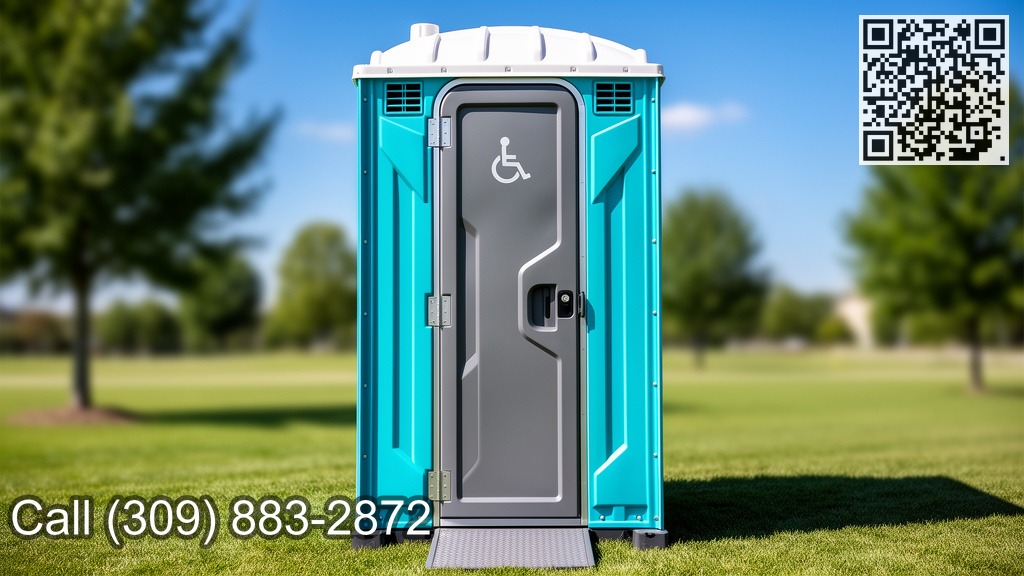
That 5 percent number sounds straightforward, yet it influences preparing earlier than many individuals understand. If you wait until the delivery van is arranged to think of ease of access, you might find that the easily accessible system was not reserved, the website can not suit it appropriately, or the amount bought leaves no space to fulfill the minimum ratio. Ease of access has a tendency to go much more efficiently when it is dealt with at the very same time as the first restroom count, not as a different add-on.
This is additionally where language can get sloppy out there. You might hear individuals ask for an ada portable restroom, an ada mobile toilet, or an ada handicap obtainable mobile toilet. Those expressions prevail in daily speech, but the important issue is not the tag in a rental brochure. The question is whether the unit and its positioning please the federal accessibility needs that apply.
What "accessible" means in practice
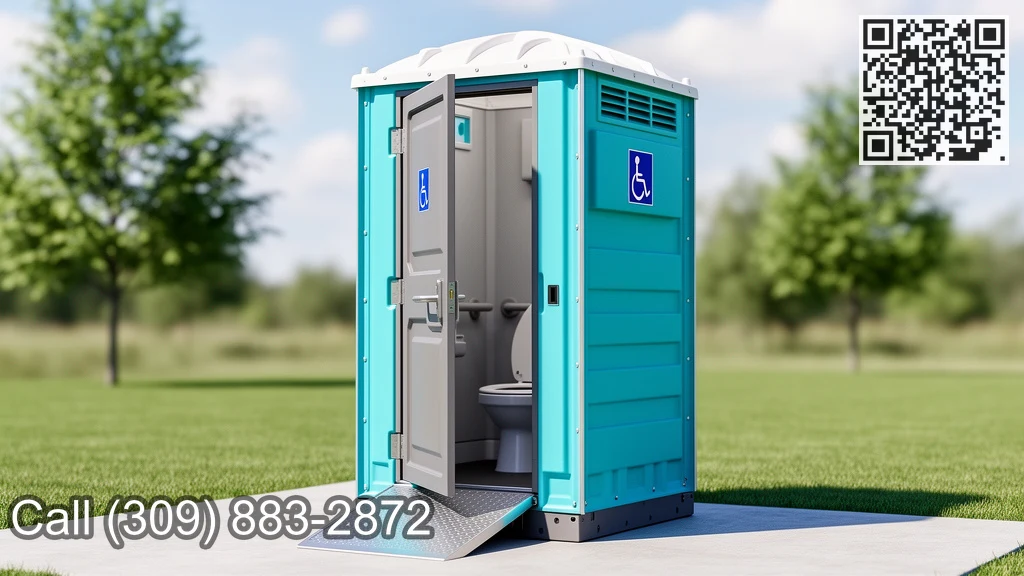
An obtainable mobile commode is not specified by size alone. A bigger footprint helps, but federal standards go additionally. The system has to meet relevant toilet-room technical requirements, consisting of issues such as clearances, turning space, door steering clearance, and appropriate policies for grab bars and water storage room clearances.
Those details matter since they influence whether someone can really get in, position themselves, and make use of the commode with self-respect and freedom. A roomy interior that lacks proper handling clearance can still fail. A device with a heavy or unpleasant door method can still stop working. A stall that practically contains a bathroom however does not offer the required usable space around it can still fail.
That is why the phrase ada certified portable toilet demands must never ever be lowered to a marketing insurance claim. Compliance is a combination of layout attributes and website conditions. Both matter. A correctly manufactured available device can end up being hard to reach if it is set in mud, obstructed by curbs, or gotten to only by a steep improvisated ramp.
The criteria likewise call for obtainable mobile commode systems to be understood the International Symbol of Accessibility. This is not just an aesthetic courtesy. It aids customers situate the easily accessible choice promptly, particularly in big clusters where people might be scanning from a range or navigating with crowds.
The course matters as much as the unit
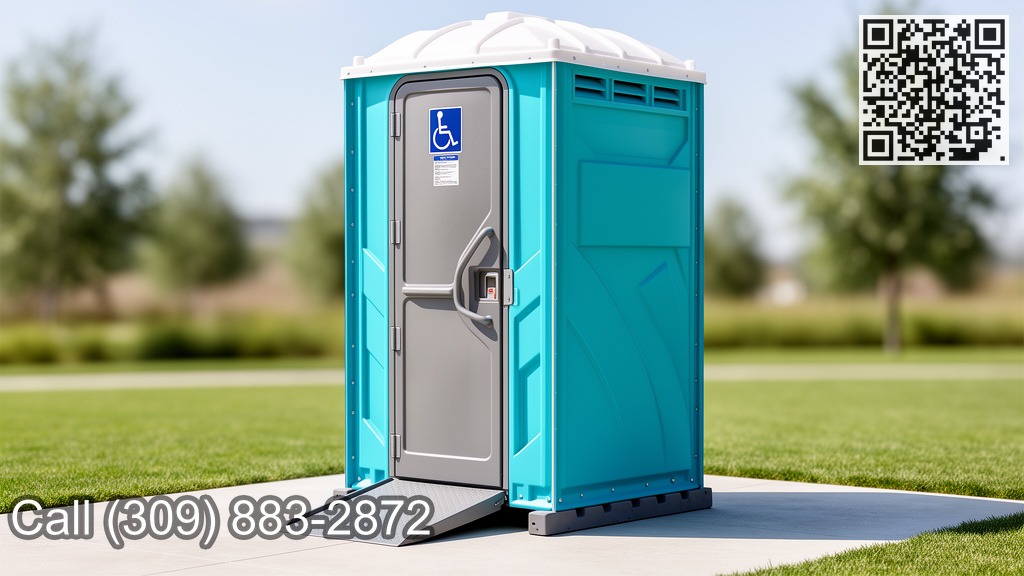
One of the most neglected components of compliance is the path resulting in the bathroom. Federal guidance does not quit at the bathroom door. Accessible mobile devices should have an easily accessible route and entryway, and any ramps or touchdowns that are required should comply with ADA technical requirements.
This is where also well-intentioned website arrangements can run into difficulty. A vendor might deliver a certified system, however the final placement is frequently regulated by the occasion organizer, general service provider, property manager, or website superintendent. If the only path requires crossing deep crushed rock, soft turf after rainfall, or a sudden level adjustment without any compliant ramp or touchdown, the device might not be meaningfully easily accessible although the devices itself is correct.
I have actually seen this issue in short-lived configurations where the available washroom was put at the much edge of an area since that is where the truck had space to discharge. Theoretically, an ada compliant available portable restroom had actually been gotten. In method, a mobility device user would have needed help just reaching it. That kind of inequality is precisely why placement should never be treated as a minor logistics note.
A good website testimonial asks sensible inquiries before shipment. Can someone method the entry without running into an obstacle? Is the ground steady sufficient for predictable movement? If a ramp or touchdown is called for, has any person validated that it fulfills the suitable technological requirements instead of operating as a harsh ease fix? Those concerns save embarrassment later, and a lot more importantly, they protect actual access.
The 5 percent regulation, and why "cluster" matters
The federal basic speaks with clusters of mobile single-user bathroom systems. At the very least 5 percent in each cluster need to be accessible. That expression, each cluster, deserves decreasing for since it has genuine functional consequences.
If washrooms are split throughout a site, ease of access needs to not be considered something that can simply be concentrated in one remote corner. The policy is tied to each cluster, not to the complete count across an entire building in the abstract. For event and website planning, that suggests distribution issues. If people are expected to utilize numerous distinct teams of systems, access needs to follow that same logic.
This factor frequently obtains lost when somebody states, "We have one available system somewhere on website." Occasionally that declaration holds true yet inadequate. The relevant federal guideline is not pleased by obscure schedule if the cluster-based requirement is not met.
For planners, the safer habit is to map washroom areas initially, identify where the actual collections are, and after that calculate the obtainable devices for every grouping. It is a lot easier to do this before contracts are wrapped up than to scramble after trucks are rolling.
A brief planning check before you order
A percentage of breakthrough preparation prevents most portable toilet access mistakes. The government requirements are technological, but the early decision points are not mysterious.
- Count how many single-user mobile units will certainly be in each collection, not simply the overall across the whole site.
- Confirm that a minimum of 5 percent of the devices in each cluster will certainly be accessible.
- Plan an accessible course to the system, including any kind of needed ramp or landing conditions.
- Verify that the accessible unit will certainly be identified with the International Icon of Accessibility.
- Review positioning conditions on site, because a certified device can still become unusable through inadequate area choices.
That list is basic purposefully. It does not change a lawful or layout testimonial, however it records the preparation choices that most often establish whether the last setup works.
The construction-site question
Construction setups commonly produce confusion because there is a specific distinction in the standards that individuals half-remember and then apply also broadly. The older 1991 ADA design requirements included an exemption pertaining to mobile commode devices at construction sites when those systems were used solely by construction workers. That exemption has led some individuals to think that all short-term toilet configurations at work websites are exempt from accessibility demands. That is as well broad and can be a pricey misunderstanding.
The key point is the narrowness of the distinction. The exemption referenced in the validated context relates to construction-site mobile toilet units utilized specifically by construction personnel under the cited 1991 criterion. It does not remove the wider ease of access requirements that relate to basic portable commode rentals. When a mobile restroom setup offers the general public, site visitors, or various other users outside that minimal exclusive-construction-personnel circumstance, the availability analysis changes.
That distinction issues on mixed-use sites. A redevelopment job may have mobile units behind secure fencing for staff use only, while likewise maintaining public-facing temporary facilities for consumers, residents, or site visitors close by. Treating those as the very same group is risky. The details of use matter.
This is one factor experienced website managers different inner assumptions from public-facing obligations. If there is any type of opportunity a device is intended for public accessibility, public programming, or visitor usage, it is important to examine it under the appropriate federal availability needs instead of relying upon hearsay concerning a building and construction exception.
Why tags from suppliers are not enough
The rental market utilizes a great deal of shorthand. You will certainly see phrases such as ada compliant mobile toilets, ada-compliant portable toilets, ada certified mobile commode, and ada-compliant portable bathroom in pamphlets, online inventory pages, and quote sheets. Those labels can be useful for starting the conversation, but they ought to not finish it.
A supplier might correctly recognize a system designed for accessibility, however compliance is not just a product group. It is an item plus deployment concern. If the path is inaccessible, if the cluster matter is managed improperly, or if the device lacks the called for identification, the configuration can still drop short.
This is where seasoned coordinators tend to ask more sharp questions. Not "Do you have an ADA unit?" however "Just how will the easily accessible system be identified?" "What website conditions does it require?" "Can our chosen area sustain an obtainable entryway?" "How should we think of numerous clusters?" Those questions create far better results than depending on a magazine label.
For people looking online, terms like ada portable commode rental or ada certified mobile commodes are useful search language, but they need to cause a detailed conversation, not a box-checking exercise.
Temporary events are not a loophole
The Access Board's analysis that the 5 percent accessible-unit regulation applies even at temporary events is among the most crucial factors in this whole topic. It removes a very common assumption that pop-up or short-duration events run under looser expectations.
From a functional perspective, temporary occasions can be more difficult to get right than irreversible facilities. Ground conditions transform by the hour. Foot web traffic is unforeseeable. Setup crews are moving fast. Paths that appear convenient in the early morning can end up being challenging by midafternoon if lawn transforms soft or crowd-control equipment blocks an approach.
That is why temporary event ease of access requires someone to have the details. If nobody is plainly liable, the available course is frequently the very first point to degrade. A device may be provided appropriately, significant properly, and counted correctly, yet then ringed with momentary barriers, parked beside a service path, or stranded on terrain that no longer functions well.
I have actually seen occasion teams treat availability as an acquiring line item when it actually needs to be an operations issue too. An available mobile bathroom has to stay available after shipment, through real occasion problems, not just during the website map phase.
Common failure factors that do not look evident at first
Most ease of access errors with mobile washrooms are not remarkable. They are common oversights that stack up.
One frequent problem is dealing with the easily accessible unit as interchangeable with typical devices when format modifications occur late. The larger device commonly requires even more mindful placement, and moving it casually can compromise the route or entrance. Another issue is separating the accessible system too much from the rest of the cluster in the name of benefit for distribution or servicing. That can develop a segregated customer experience and may not align with exactly how the collection rule runs in practice.
A third trouble is assuming company ground without examining just how the site acts under climate and website traffic. A path that works on completely dry configuration day might come to be hard after rain or after hundreds of individuals cross the area. Portable restroom planning has a tendency to go much better when groups ask not only "Will this operate at 8 a.m.?" but also "Will this still job halfway with the occasion?"
There is additionally the issue of signs and presence. The International Sign of Access is called for, and it assists greater than some coordinators value. At crowded websites, individuals choose promptly. Clear recognition minimizes complication, specifically when assistants, volunteers, or staff are not close-by to direct people.
Compliance lives in a larger enforcement environment
Accessibility planning for portable bathrooms does not take place alone. A wider conformity environment has been developing throughout markets, and that matters even when the particular topic is a short-term bathroom rental.
A current instance is the Division of Justice advice from April 2026 prolonging the target date for sure state and city government internet and mobile access regulations to April 26, 2027 for bigger entities. That guidance has to do with electronic access, not portable bathrooms. Still, it indicates something important: ADA conformity stays an active enforcement and plan location. Organizations must not think accessibility obligations are fading right into the history. If anything, the contrary is true.
For public firms, event operators, and organizations that offer the public, this wider climate should encourage a more disciplined approach. Ease of access is best managed as a regular planning criterion, not as an afterthought set off just by complaint.
How to talk to your rental provider and your website team
An effective conversation concerning an ada available mobile washroom typically includes two groups simultaneously: the rental service provider and individuals controlling the website. If those discussions happen individually, spaces show up. The vendor might assume the route is somebody else's duty. The site group may assume the device itself assures compliance. Neither presumption is safe.
The greatest approach is to link the government needs directly to the site plan. Go over the number of units in each collection, the requirement for accessible identification, and the route to the entry prior to distribution day. If ramps or touchdowns may be required, elevate that concern early, since those functions are not something to improvise casually on the spot.
Here are the inquiries that tend to emerge the right concerns quickly:
- How lots of portable single-user units will certainly be in each cluster?
- Which systems are intended to serve as the accessible units for those clusters?
- What is the available path to every of those units from the expected factor of arrival?
- Will any kind of ramp or touchdown be required, and if so, who is accountable for guaranteeing it complies?
- How will the accessible units be marked with the International Icon of Accessibility?
That sort of discussion is not overkill. It is the functional happy medium in between legal abstraction and last-minute scrambling.
The human side of getting it right
Standards language can appear technological, however the factor behind it is simple. People need washroom gain access to that is functional, predictable, and considerate. When that accessibility is missing, the problem falls on the individual that required the center, not on the coordinator who failed to assume ahead.
That problem turns up in ways that are easy to underestimate. A guest might need to request help they did not want. An employee might need to travel much further than coworkers for basic access. A visitor may leave an event early since the route to the only available unit is too challenging. These are not abstract harms. They transform whether an individual can participate fully in work, public life, entertainment, and neighborhood events.
When teams treat ada compliant obtainable mobile washrooms as part of typical procedures rather than a niche lodging, the result is normally far better for everybody. Paths are more clear. Layouts are more thoughtful. Team are less likely to improvisate under pressure. Most notably, users experience a website that anticipated their presence instead of responding to it.
What "functional" actually suggests here
A functional overview of government standards ought to leave area for judgment without wandering right into uncertainty. The hard anchors are clear. The managing federal criteria come from the 2010 ADA Criteria for Accessible Design as interpreted by the DOJ and Access Board. At least 5 percent of single-user portable bathroom systems in each cluster need to come, including at short-lived occasions. Obtainable devices have to lug the International Sign of Accessibility. They have to have an accessible course and entry, and any kind of called for ramps or landings have to abide by ADA technological needs. The units themselves should satisfy applicable toilet-room technical regulations concerning clearances, transforming room, door steering clearances, and pertinent grab-bar and water wardrobe clearance requirements.
From there, the functional work is disciplined implementation. Order the ideal devices. Matter by cluster. Put them where people can really reach them. Safeguard the path after arrangement. Do not rely upon advertising and marketing language where an actual site evaluation is needed. And take care with the construction-site exception, since it is narrower than many people assume.
That is the heart of ADA planning for portable washrooms. The standards are federal, but the result is regional and immediate, formed by where the unit rests, how the ground behaves, and whether somebody can utilize it without obstacles. When those information are managed well, access quits sensation like a technological worry and starts functioning as what it ought to be, regular proficient planning.
 Ask ChatGPT
 Ask Grok
 Ask Perplexity
 Ask Claude
 Ask Google AI
 Ask You