Entry · Ref SHHLSLRL
ADA Compliant Portable Toilets: Understanding Door Maneuvering Clearances
- Posted
- 2026-10-03
- Last amended
- 2026-10-03
- Account
- @jaredfibb965
When people ask whether an ada certified portable bathroom is "big sufficient," they are usually asking the incorrect question.
Size matters, obviously, however it is only part of the tale. A mobile unit can look roomy from the outside and still fall short the individual who requires to enter, shut the door, reposition, and exit without stress or risk. That is where door steering clearances ended up being so vital. They rest at the crossway of self-respect, safety and security, and ordinary practicality.
If you work with momentary restrooms typically, you discover rapidly that accessibility problems hardly ever introduce themselves in a spec sheet. They appear when a guest in a wheelchair can not angle right into the doorway cleanly. They show up when someone needs even more room to handle the door than the arrangement permits. They show up when a device that seemed fine in the yard becomes tough to utilize once it is dropped onto soft ground or crowded into a tight row at an event.
For ada compliant portable bathrooms, the federal framework is clear on the large picture. The managing criterion in the United States is the 2010 ADA Criteria for Accessible Layout, as analyzed by the Gain access to Board and the Division of Justice. Mobile available units require an obtainable route and entryway. They should fulfill toilet-room technological demands, including turning space, fixture clearances, relevant grab bar and water closet clearance guidelines, and door handling clearances. That last piece is very easy to neglect until you recognize the number of access failures start and end at the door.
The door is not a tiny detail
An entrance is not just an opening in a wall surface. For many users, it is the hardest component of the experience.
Think regarding what happens in genuine use. An individual comes close to the unit, positions themselves to run the door, handles the swing, goes into while keeping equilibrium or wheelchair tool control, after that shuts the door behind them. Later, they repeat the process in reverse. If there is insufficient area to steer on either side of that door, the issue is not aesthetic. The unit can end up being aggravating, laborious, or efficiently unusable.
That is why the ADA technological demands deal with door handling as component of access, not as a nice additional. An ada available mobile washroom has to operate in motion, not simply on paper.
People sometimes presume that if the interior has sufficient turning area, the work is done. In practice, the path with the doorway matters just as much. You can have respectable interior room and still create a bad experience if the entrance condition forces unpleasant positioning. This shows up commonly at fairs, exterior wedding celebrations, local events, jobsite assistance areas, and emergency situation feedback configurations where every foot of positioning area really feels precious.
The temptation is always to put the ada mobile restroom versus a fence line, generator, barrier, or adjacent unit to save space. That is often the minute steering clearance starts to disappear.
What the criteria need, in simple language
The validated federal advice informs us numerous points that matter here.
Portable available devices have to fulfill the toilet-room technical needs, and that includes door maneuvering clearances. They additionally need an obtainable route and entry, and if ramps or touchdowns are needed, those elements must abide by ADA technological demands too. For collections of portable single-user commodes, at least 5 percent of the units in each cluster have to be accessible, which guideline uses also at short-term events. Easily accessible units have to likewise be understood the International Icon of Accessibility.
Those demands sound simple, however the field conditions are where judgment issues. Door steering clearance is not only regarding the device itself. It is additionally about just how and where the system is put. A compliant unit can be weakened by a bad design. A thoughtful format can maintain access even on a tough site.
That is the part many customers, organizers, and even some experienced crews miss out on. Conformity is not just an issue of purchasing an ada-compliant portable toilet. It is also an issue of installing it in a manner that enables the required accessibility features to work as intended.
Where tasks go wrong
The most typical problems with an ada compliant mobile bathroom leasing do not normally originated from poor purposes. They come from hurried planning, crowded sites, and assumptions.
A mobile restroom provider may send a proper system, however the shipment spot is sloppy, sloped, or separated by cords and short-lived secure fencing. An event organizer may book ada certified easily accessible mobile restrooms, but place them at the much edge of the website where the route is tough or obstructed. A building manager may recognize that unit requires to be accessible, but not assume carefully about exactly how the door actually runs as soon as the unit is surrounded by tools or piled materials.
Door handling clearances are specifically susceptible due to the fact that they are unseen to individuals who do not need them. If you are able-bodied, it is easy to take a look at a device and believe, "There is lots of room." But maneuvering is not gauged by visual perception alone. It depends on technique, reach, positioning, door operation, and useful room before and after travelling through the opening.
This is one reason access grievances typically involve configurations that seemed practical to every person on site till someone attempted to utilize them under real conditions.
Placement can make or break an easily accessible portable restroom
The available path is part of the same conversation as the door. If someone can not approach the entrance appropriately, maneuvering clearance ends up being theoretical.
Imagine an ada handicap available portable restroom placed at the end of a row on small gravel. If the path to it is steady and unhampered, and the location around the entry is preserved so the door can be managed easily, the device has a dealing with possibility of performing as planned. Relocate that exact same unit onto uneven ground, group it firmly versus obstacles, or leave no functional area around the entry, and the customer might struggle before also going across the threshold.
I have seen configurations where the accessible unit was practically present, clearly labeled, and still functionally bad because a wastebasket, handwash station, or momentary indication structure had crept right into the technique location. No person thought of those things as obstacles. For the customer, they definitely were.
This is where empathy matters. Accessibility is not regarding examining whether the system arrived. It has to do with asking whether an individual can utilize it independently and with affordable ease.
Temporary events still count
An unusual variety of individuals assume ADA expectations loosen when an event is short-lived. They do not.
The Gain access to Board guidance explains that for clusters of mobile single-user toilet units, at least 5 percent in each cluster should be accessible, and this uses even at short-term events. That matters for concerts, races, food events, area celebrations, election-day assistance locations, and catastrophe reaction staging. A short duration does not erase the responsibility to provide access.
Door handling clearances are specifically essential in event settings due to the fact that momentary designs commonly squeeze flow. Tents go up. Barricades shift. Solution roads narrow. Queues create in position no person expected. What looked sufficient on a tidy site map can become hard after setup.
The sensible lesson is straightforward. If you are planning a financial institution of portable devices, do not treat the easily accessible device as the one that can soak up all the remaining spatial compromises. It requires area to work, particularly at the entrance.
Why this issues for self-respect, not just compliance
People that rely on easily accessible functions notice promptly when a bathroom has been treated as an afterthought.
The experience can be dissuading in such a way that is hard to explain if you have actually never taken care of it on your own. A visitor may come to a wedding celebration and realize the "accessible" bathroom is there just in name. A parent helping a grown-up youngster might discover the door area is so confined that every activity ends up being uncomfortable. Someone participating in a public event https://pristineportablesil.com/construction/ might make a decision to leave early rather than face the effort and embarrassment of attempting to use an inadequately placed unit.
This is not abstract. Bathroom gain access to forms whether individuals remain, participate, function conveniently, and feel welcome.
An ada mobile toilet is commonly reviewed as tools. It is likewise hospitality. It is incorporation. It is risk monitoring, yes, but it is also respect.
The difference in between ordering the ideal device and utilizing it correctly
Many buying teams concentrate on item tags. They look for expressions like ada compliant portable bathrooms, ada-compliant mobile restrooms, or ada portable commode rental, then assume the tag solves the problem. It does not.
The best device is just the starting factor. The area setup has to preserve the available features that unit was made to provide. That consists of the path to the washroom, the entrance problem, and the usability of the door.
A mobile restroom can lose practical access in several methods after delivery:
- It is put where the method is blocked by fencing, containers, cords, or event furniture.
- The ground or landing location at the entry is not ideal for a tidy, steady approach.
- The system is crowded so firmly against various other short-lived structures that the door area ends up being difficult to use.
- Site changes after delivery create new obstacles that were not present throughout placement.
- Staff assume signs alone makes the unit accessible.
None of those failures need a defective bathroom. They originate from decisions around it.
Door maneuvering clearances belong to the user journey
It helps to think of the toilet experience as a sequence instead of a single object.
A person has to find the obtainable device, reach it by an easily accessible route, approach the entry, handle the door, go into, make use of the components, reposition as required, and leave securely. If one step breaks down, the entire experience breaks down.
That is why the requirements team door navigating clearances alongside various other toilet-room technical demands. They belong in the same group of basics as transforming area and fixture clearances. They are not attractive style preferences. They are what make independent usage possible.
In mobile settings, this can be a lot more fragile than in permanent building and construction since the environment transforms so rapidly. Rainfall alters surface areas. Groups press against temporary secure fencing. Vendors expand their impact. Website traffic cones migrate. Solution distributions obstruct courses. The available problem requires to be secured throughout the event or rental duration, not just achieved at drop-off.
Questions worth asking before shipment day
A great deal of frustrations can be stopped by a brief, straightforward preparation discussion. If you are renting out an ada-compliant portable bathroom, you need to know greater than whether one is offered. You want to know whether your website can sustain its available use.
The best coordinators I work with do not begin by asking for the most inexpensive device or the narrowest impact. They begin by defining the website, the audience, the likely web traffic pattern, and that will certainly check problems after arrangement. That leads to much better decisions.
Here are the inquiries I would certainly increase early with any type of portable washroom service provider or site lead:
- Where will certainly the accessible course start, and who is responsible for maintaining it clear?
- What is the precise positioning plan around the doorway, not just around the unit as a whole?
- Will any type of ramps or touchdowns be needed, and if so, just how will conformity be handled?
- How will the available unit be identified on website so people can locate it easily?
- Who will check after configuration that bordering items have not compromised the entrance area?
That sort of discussion is much more useful than merely duplicating ada portable toilet needs as a phrase. Demands live or die in the information of positioning and maintenance.
Special note on building sites
There is one subtlety that can develop confusion. The older 1991 ADA common distinguished portable commode systems at building and construction sites made use of solely by construction workers, which were exempt from the portable-toilet ease of access scoping need referenced there. That does not indicate every construction-related portable commode inquiry disappears under a blanket exemption, and it definitely does not transform the wider policy for basic mobile commode leasings and short-lived public-facing situations.
What issues in practice is understanding the usage instance. If you are managing basic leasings, public occasions, or portable bathroom clusters offering participants or a broader user base, accessible-unit requirements continue to be very much in play. It is not important to presume that "short-term" or "jobsite adjacent" indicates ease of access can be ignored.
Because the line in between workforce use, visitor gain access to, and public lodging can get jumbled quick, cautious planning is normally the far better path.
A note about enforcement and interest to detail
Accessibility compliance is not getting less important. If anything, the broader compliance atmosphere keeps advising companies that ADA responsibilities remain to receive severe interest throughout fields. That matters since bathroom accessibility is often handled by the exact same establishments that are managing many other compliance responsibilities.
What I draw from that is not be afraid, but perspective. The details matter. An easily accessible portable toilet is not a token item to satisfy a list. It becomes part of a pattern of operational treatment. Teams that are disciplined regarding gain access to in one area have a tendency to be much more disciplined in others.
When I see a site where the available unit has a clear route, a sensible placement, visible recognition, and an entrance location kept free for actual handling, it typically informs me something motivating about the whole operation. Someone thought it via. A person anticipated real people to utilize it.
The human criterion behind the technological standard
It is simple to obtain lost in the vocabulary of laws and item classifications: ada certified mobile washrooms, ada-compliant mobile bathrooms, ada certified mobile commode, ada accessible portable toilet. Those terms aid during procurement, yet they can likewise make the concern feel remote and bureaucratic.
The much better inquiry is a lot more direct. Can an individual usage this restroom without unnecessary struggle?
Door maneuvering clearances rest appropriate inside that inquiry. They are not a side concern. They are one of the practical conditions that identify whether gain access to is genuine.
If you are renting out devices for an occasion, ask to stroll the website from the customer's perspective prior to opening. If you are the service provider, do not stop at distribution. Take a look at the entrance area the way a first-time customer would. If you are the coordinator, shield that space once the website gets busy. Access can be reversed by one reckless placement of a barrel, indication, or stack of supplies.
An ada compliant portable toilets strategy is successful when no one has to say concerning whether the obtainable unit "matters." It is obviously reachable, clearly functional, and clearly planned for real human needs.
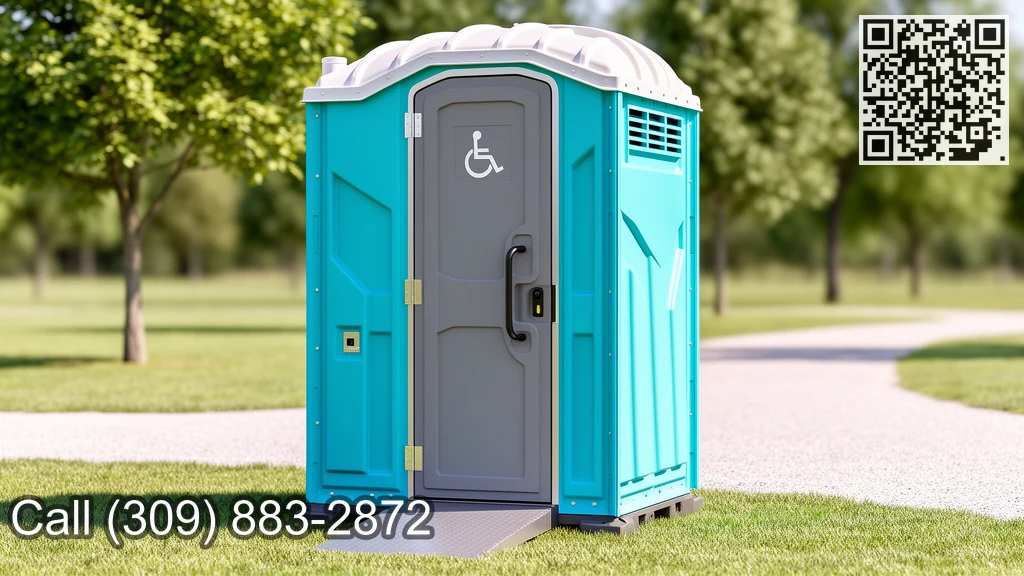
That is the standard worth going for. Not since it sounds great in an agreement, but due to the fact that it saves individuals the exhausting experience of reaching a bathroom that assured access and supplied barriers instead.
 Ask ChatGPT
 Ask Grok
 Ask Perplexity
 Ask Claude
 Ask Google AI
 Ask You